

Seeing more armadillos?
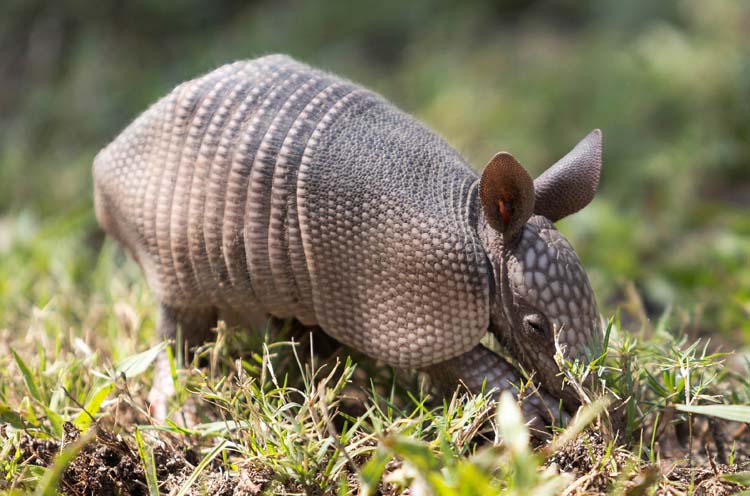
-Photo: UF/IFAS
By Tami Stevenson
They may look like tiny armored tanks wandering across Florida’s landscapes, but the nine-banded armadillo is far more than an odd backyard visitor. As the species enters its annual breeding season, wildlife experts are encouraging residents to learn more about one of the Sunshine State’s most recognizable—and most misunderstood—mammals, whose unusual biology and important role in the ecosystem make it far more fascinating than many realize.
Armadillos can carry the bacteria causing Hansen’s disease (leprosy). Central Florida has recorded localized increases in cases, though health officials state the overall public risk is low and infection typically requires direct, prolonged handling of the animals or contaminated soil.
According to a release from UF/IFAS scientists, armadillos are not native to Florida, the species of armadillo — whose name translates from Spanish as “little armored one” — can be found in every county throughout the Sunshine State. A familiar backyard visitor, the mammal’s unique biology, impressive digging skills and unusual reproductive strategy make it one of the state’s most fascinating and misunderstood mammals.
“The nine-banded armadillo is one of Florida’s most recognizable mammals, yet many people know very little about it. Beneath the armored exterior, its journey into Florida serves as a fascinating wildlife success story,” said Hance Ellington, assistant professor of wildlife ecology and conservation at the UF/IFAS Range Cattle Research and Education Center in Ona. “Native to South America, Central America and Mexico the species began expanding its range in the mid-1800s, crossing into Texas and ultimately reaching Florida by the mid-1900s.”
The Ask IFAS Extension document UF/IFAS Wildlife of Florida Factsheet: Nine-banded armadillo, also now available in Spanish, highlights the unique traits and history of the nine-banded armadillo, including where it lives, what it eats, how it reproduces and the surprising benefits it provides to a variety of Florida’s ecosystems.
“Seeing more armadillos during the summer is normal. By understanding their behavior and habitat needs, residents can better appreciate these unique animals,” said Ellington. “While some people notice them when they are digging their burrows, armadillos are important ecosystem engineers whose burrows provide shelter to a variety of other wildlife species.”
The UF/IFAS Extension document reveals several surprising facts about the nine-banded armadillos, including that they:
• Are excellent diggers that may maintain numerous burrows within their home range.
• Cannot roll into a ball, despite popular myths, but can leap into the air to surprising heights.
• Are strong swimmers and can increase buoyancy by swallowing air.
• Are the only vertebrates known to routinely produce four genetically identical offspring from a single fertilized egg.
• Primarily eat insects such as grubs, beetles, ants and worms.
“Armadillos spend much of their time digging for insects and other invertebrates which account for about 90% of their diet,” said Ellington. “Their foraging helps suppress populations of common pests that damage landscapes, gardens and agricultural crops.”
For residents concerned about armadillo digging on their property, Ask IFAS authors recommend:
• Reducing food sources such as grubs and earthworms through careful watering practices.
• Removing fallen fruit.
• Installing fencing or barriers around sensitive landscape areas.